

The streets and compounds of Kokomlemle once again came alive with the vibrant colours, rhythmic drumming, and aromatic scent of kpokpoi as the Ga community celebrated this year’s Homowo Festival.
At the centre of the festivities stood Nii Ayikwei Kakalor I, Chief of Kokomlemle, who used the occasion not only to mark three years on the stool but also to deliver a strong message of hope, discipline, and cultural pride to the youth and residents of the community.
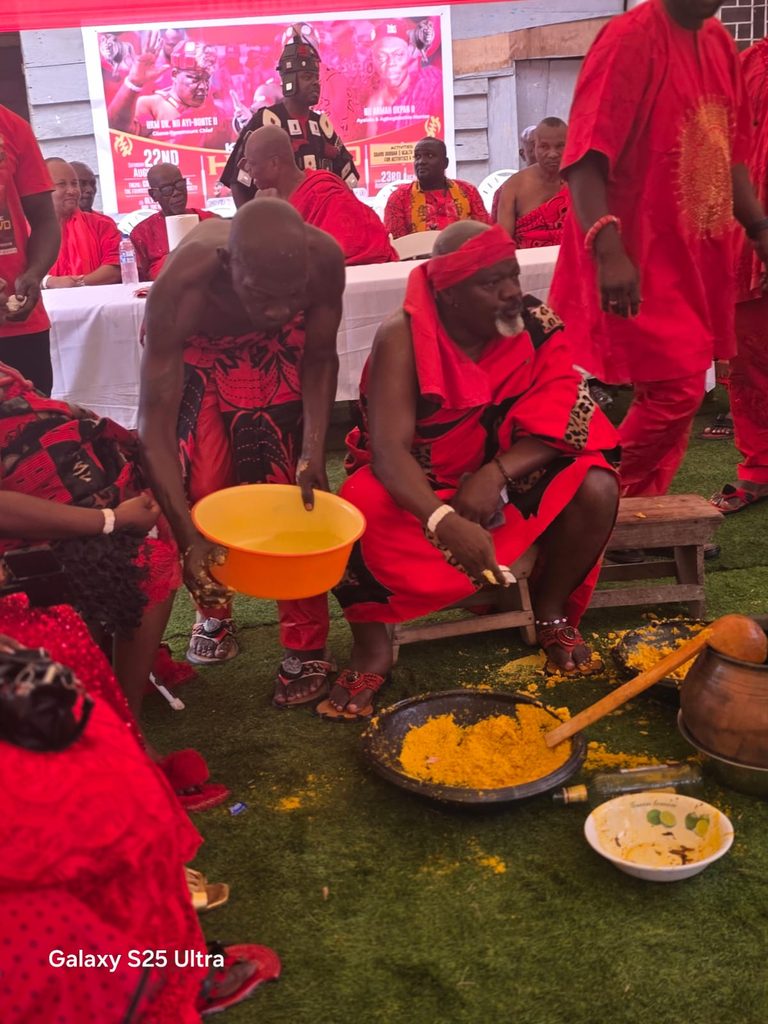
In his keynote address from the Palace of Kokomlemle, Nii Ayikwei Kakalor I wished all residents and well-wishers a Happy Homowo. He noted that the celebration marked three years of his reign and his second time performing the sacred sprinkling of kpokpoi as Chief of Kokomlemle.
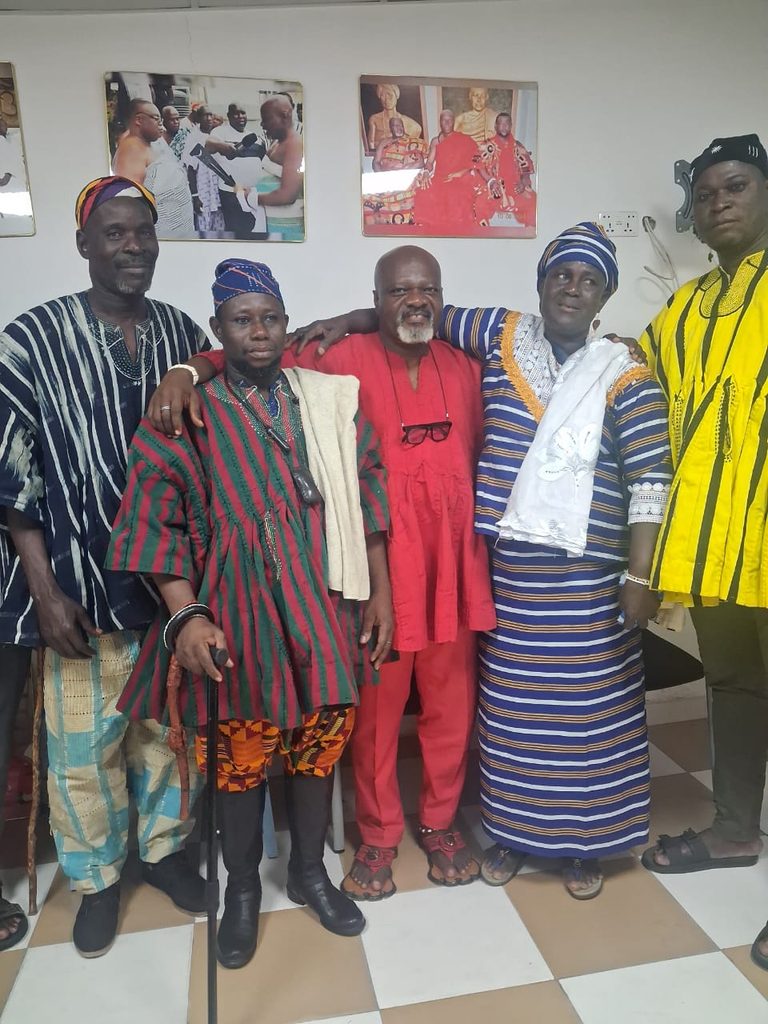
According to the chief, this year’s Homowo was more beautiful and successful than the previous one, with the traditional sprinkling of the festival food extended to a wider area within the community.
“This year’s Homowo celebration has been more beautiful and successful than last year’s, with the sprinkling of Kpokpoi extended to a wider area in the community,” the chief stated. He thanked his family, invited guests, and the entire Kokomlemle community for their unwavering support and active participation that made the festival a success.
Nii Kakalor I reserved special words of counsel for the youth. He strongly advised them to desist from drug use, describing it as a destructive habit that ruins the future. Instead, he urged young people to prioritise education and strive to become better versions of themselves for the benefit of their families and the wider community.
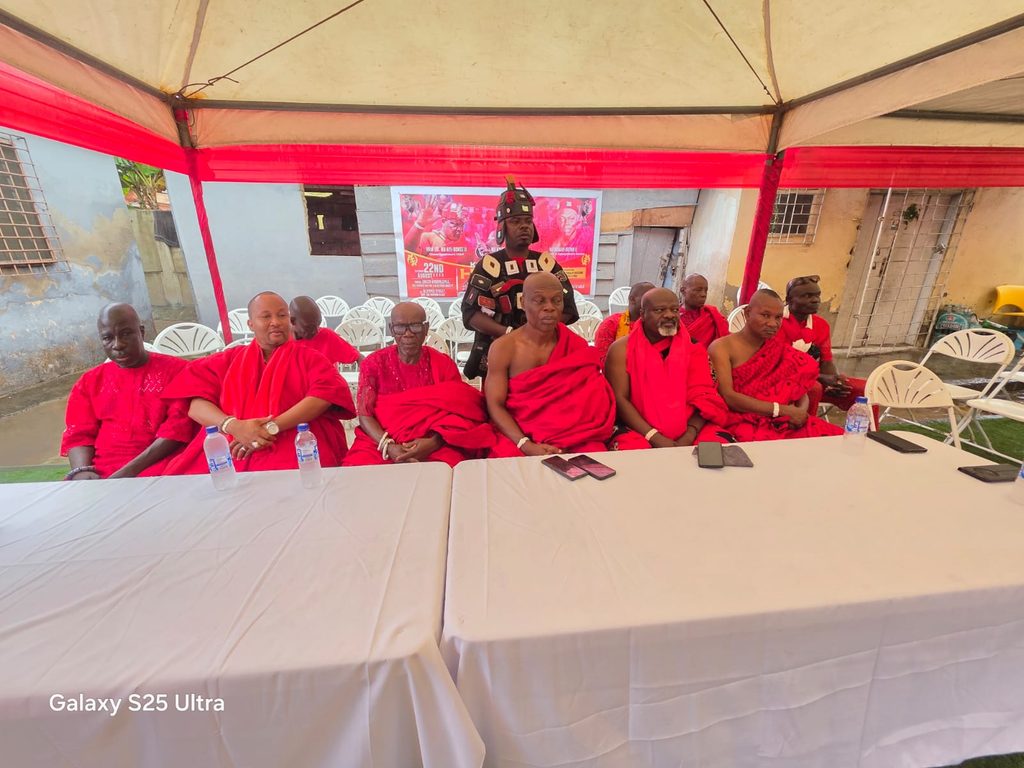
The message of unity and education was reinforced by Nii Armah Okpah II, Regent of Gbese Mantse and Chief of Agbogloshi / Korle Woko. In his address, he stressed the importance of oneness among the people.
“In oneness everything will be well, but in disunity nothing will be well,” he declared, calling on everyone to let unity reign. He concluded by thanking all who had come to celebrate this year’s Homowo Festival.
Hooting at Hunger: The Deep Roots of Homowo
Homowo, which means “hooting at hunger” or “jeering at hunger” in the Ga language (from “homo” meaning hunger and “wo” meaning to hoot or jeer), is one of the most significant traditional festivals of the Ga-Dangme people of Greater Accra. It is far more than a harvest celebration; it is a living memorial of survival, resilience, and thanksgiving that stretches back centuries.
Oral traditions trace the origins of Homowo to the long migration of the Ga people. Accounts vary on the exact starting point—some point to regions near present-day Nigeria or Benin, others mention connections to Ile-Ife or even further east—but the core story remains consistent.
During their journey westward and eventual settlement on the Accra plains, the ancestors of the Ga endured a severe famine. Crops failed, food became scarce, and many lives were lost. In their desperation, the people turned to their priests (wulomei) and deities, offering prayers, sacrifices, and observing periods of silence and reflection.
When the rains finally returned and the land yielded a bountiful harvest of maize and other crops, the people celebrated not only with feasting but with a defiant act of mockery. They “hooted at hunger,” ridiculing the hardship that had once threatened their existence. From that moment, Homowo was born as an annual festival of triumph over adversity.
The festival is closely tied to the Ga native calendar, traditionally guided by the Damte Dsanwe people of the Asere Quarter and the Priest of the Dantu Fetish. Celebrations unfold across Ga towns—including Ga Mashie, Osu, La, Teshie, Nungua, Tema, and others—at slightly different times between May and September, with the climax often falling in August. Key rituals include the planting of sacred millet (Nmaadumo), a period of ban on drumming and noise-making to allow spiritual focus, processions, libations to ancestors, and the preparation and sharing of kpokpoi (also called kpekple).
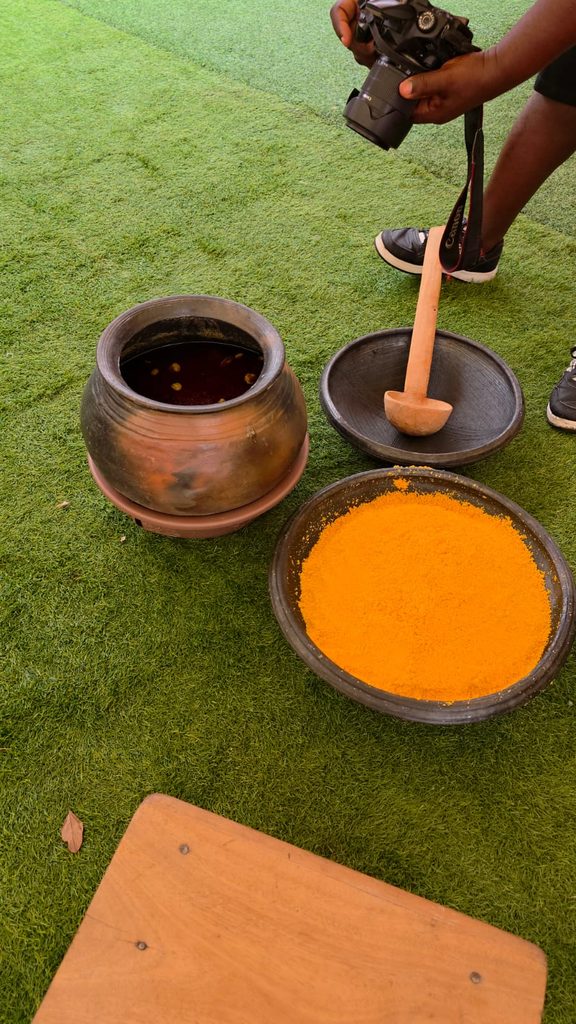
Kpokpoi itself is central to the festival’s symbolism. Made from steamed or fermented corn dough mixed with palm oil (and often served with palm-nut soup and fish), it represents the very crop that ended the ancestral famine.
The act of sprinkling kpokpoi—performed by chiefs, elders, and family heads in compounds, at shrines, doorsteps, crossroads, and ancestral resting places—serves multiple purposes. It is an offering to the ancestors and spirits, a sharing of abundance with both the living and the departed, and a public declaration that hunger has been defeated. The yellow colour of the dish, the red of festival cloth, the sound of drums and muskets, and the communal feasting all combine to create a powerful sensory experience of cultural continuity.
Tradition Meets Contemporary Guidance
In Kokomlemle this year, these ancient rites took on fresh meaning under the leadership of Nii Ayikwei Kakalor I. By extending the sprinkling of kpokpoi to a wider area, the chief ensured that more residents could participate in and benefit from the blessings of the festival. His counsel to the youth against drugs and in favour of education resonates with the historical spirit of Homowo itself—a spirit of overcoming hardship through collective effort, discipline, and forward-looking determination.
Nii Armah Okpah II’s emphasis on unity further echoed the festival’s deeper lessons. Just as the Ga ancestors survived famine through solidarity and shared purpose, modern Ga communities continue to draw strength from oneness. In a rapidly changing Accra, where urban pressures and social challenges confront traditional values, messages like these serve as vital anchors.
Homowo remains a homecoming festival. Families reunite, disputes are often set aside, twins are specially honoured in related rites, and the younger generation is exposed to the stories, songs, dances, and foods that define Ga identity. It is a time when the past is not merely remembered but actively lived—through the sprinkling of kpokpoi, the pouring of libation, the beating of drums, and the sharing of meals.
As the celebrations in Kokomlemle drew to a close, the words of the chiefs lingered: a call to reject destructive habits, embrace education, foster unity, and continue the proud tradition of hooting at hunger. In doing so, the people of Kokomlemle and the wider Ga community reaffirm that the resilience of their ancestors lives on, ensuring that Homowo remains not only a festival of the past but a guiding light for the future.
Source: Starrfm.com.gh