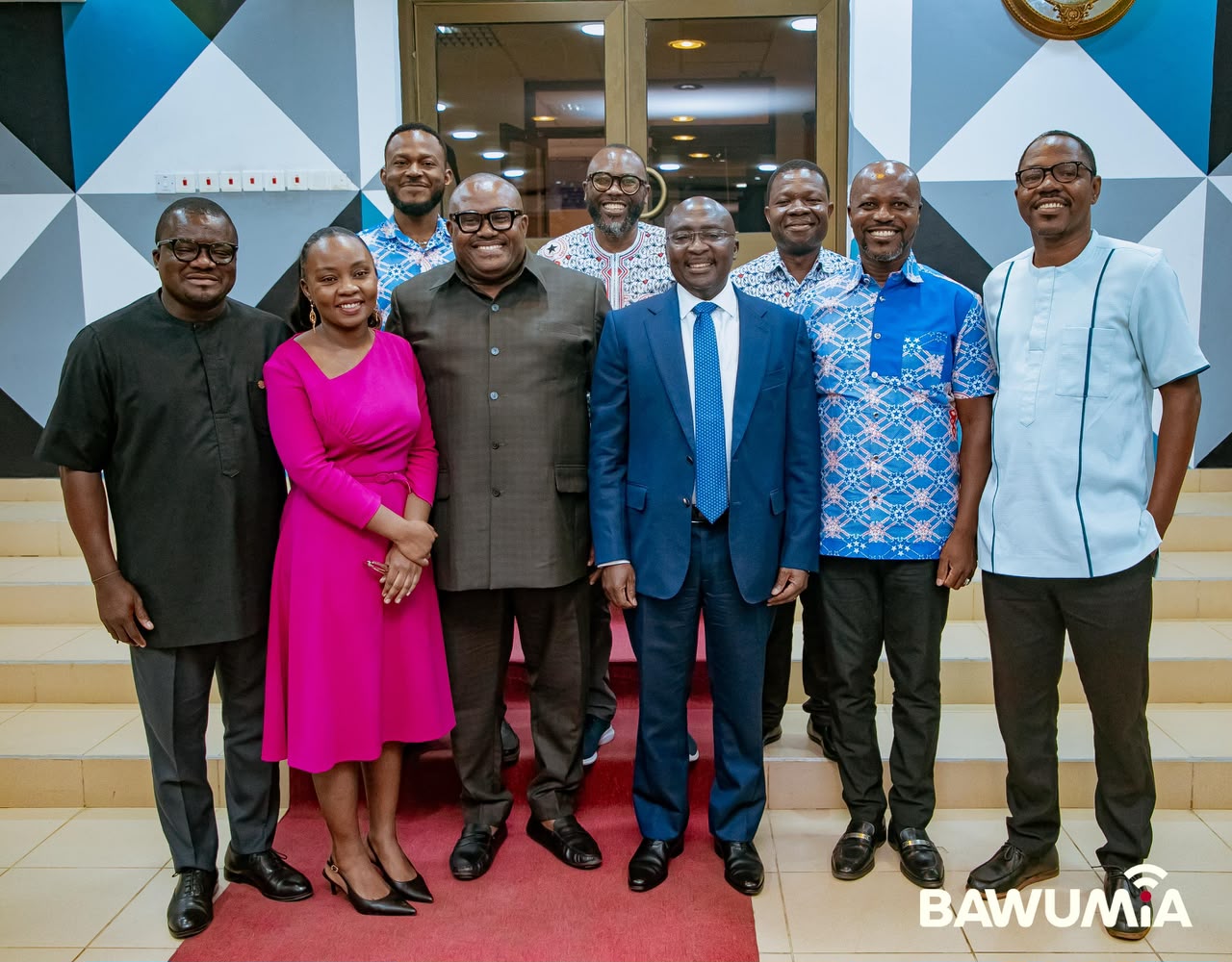
NPP 2028 presidential candidate and former Vice President, Dr. Mahamudu Bawumia, has called for a paradigm shift in Ghana’s healthcare policies following an engagement with the National Executive Committee of the Ghana Medical Association (GMA) at the GMA House, Korle Bu Teaching Hospital.
The meeting formed part of Dr. Bawumia’s ongoing consultations with key stakeholders and identifiable groups across the country.
The discussions, led by the President of the GMA, Professor (Dr.) Ernest Yorke, focused on a range of challenges confronting medical practitioners and the broader healthcare system.
Among the issues raised were health workforce retention, remuneration, the equitable distribution of medical doctors, infrastructure and emergency preparedness, conditions of service, deprived-area allowances, and the role of the private sector in healthcare delivery.
The meeting also considered the requirement by the Medical and Dental Council for doctors to undertake licensing examinations, an issue that has generated considerable discussion within the medical profession.
According to Dr. Bawumia, the engagement provided important insights into the challenges facing doctors and the healthcare sector and reinforced his view that significant changes are needed in the formulation and implementation of health policies.
“Following our discussions, I am convinced that a paradigm shift is needed in our health care policies,” Dr. Bawumia said.
He said several ideas presented during the engagement had the potential to bring about significant improvements in the welfare of doctors and the healthcare sector if implemented.
Dr. Bawumia also highlighted the importance of collaboration among stakeholders in addressing the challenges confronting Ghana’s health system.
“Healthcare delivery is a collaborative mission,” he said, expressing appreciation to the GMA President, its executive leadership and members for their insights, candour and commitment to the wellbeing of Ghanaians.
The engagement comes amid broader concerns about the retention and distribution of medical professionals, particularly the ability of the health system to maintain an adequate workforce across different parts of the country.
The discussions also touched on the need to strengthen emergency preparedness and infrastructure while examining how the private sector could contribute more effectively to healthcare delivery.
Dr. Bawumia said he was encouraged by the proposals presented by the GMA and expressed the hope that they would contribute to building what he described as a robust, resilient and patient-centred healthcare system.
He further stressed the importance of ensuring that healthcare improvements benefit communities across the country, including areas that face difficulties in attracting and retaining medical professionals.
The meeting is part of Dr. Bawumia’s wider stakeholder consultations, through which he is engaging various professional and interest groups on issues affecting national development.