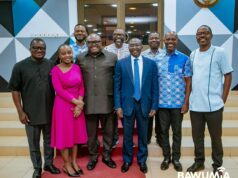

In political life, as in architecture, the quality of what is eventually built depends entirely on the quality of the planning that precedes it. By that measure, political analysts say, Dr. Mahamudu Bawumia is building on very solid ground
The NPP’s rollout of 23 sector policy committees has triggered a wave of positive commentary from academics, policy professionals, and governance experts , many of whom see the framework as evidence of a leader who understands that good governance begins long before a party wins an election.
“What distinguishes serious leaders from populist ones is the willingness to do the hard, unglamorous work of policy preparation when it would be far easier to simply criticise and wait,” said one political science lecturer at the University of Ghana, Legon, who spoke to us on condition of anonymity. “Bawumia is doing that work. The committee framework is not a communications exercise, it is a genuine governance investment.”
The praise has not been restricted to academia. Several senior civil servants, former technocrats, and private sector leaders who have been engaged to serve on the sector committees have spoken, carefully, given their professional positions, about their surprise at the depth of the NPP’s ambitions.
“The brief we received was not to produce a campaign document,” one committee member told this portal. “We were told to produce policy that could be implemented. There is a significant difference, and the NPP understands that difference.”
Analysts also note the symbolic importance of the committee structure as a signal about Bawumia’s leadership style. Unlike leaders who centralise decision-making and rely on a small inner circle, the committee architecture distributes intellectual authority and creates space for diverse perspectives — a governance philosophy that bodes well for how a future Bawumia administration might operate.
The framework, analysts say, also serves a crucial internal party function, keeping the NPP’s best minds engaged, purposeful, and united during a potentially dispiriting period in opposition, while simultaneously building institutional memory that will serve the party well whenever it returns to power.
“Bawumia is not just preparing for 2028,” one analyst concluded. “He is preparing for governance. And that distinction matters enormously.”